If you’ve spent the last year feeling like your walls are closing in, you aren’t alone. Whether it’s a needed home office, a growing family, or the desire for a luxury primary suite, the “move or improve” debate is a homeowner staple. However, before you hire an architect or swing a sledgehammer, you need a realistic grasp of the financial landscape.
The short answer? A home addition typically ranges from $22,000 to over $115,000, with high-end or second-story additions easily clearing the $300,000 mark.
In this guide, we will break down the costs per square foot, the variables of the current market, and the “hidden” expenses that often catch homeowners off guard.
The Baseline: Cost Per Square Foot
While every project is custom, the industry uses square footage as the primary yardstick for estimation. While material costs fluctuate, labor remains a consistent premium in the construction industry.
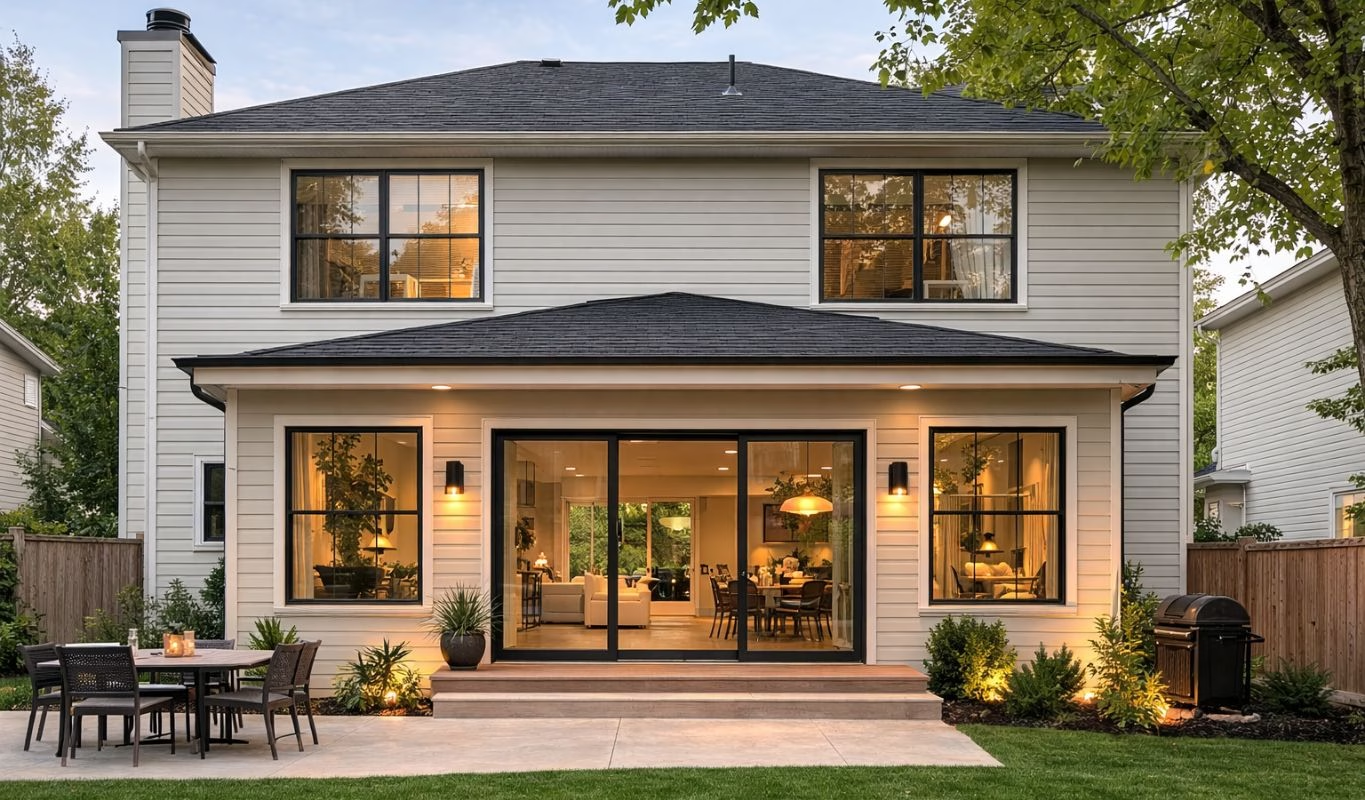
Ground-Level Build-Outs ($150 – $350 per sq. ft.): A “build-out” involves expanding the footprint of your home outward. This requires new foundation work, framing, roofing, and exterior siding.
- Basic Finishes: $150–$200/sq. ft. (Think simple bedrooms or sunrooms).
- Mid-Range Finishes: $200–$275/sq. ft. (Standard family rooms or dining extensions).
- High-End Finishes: $300+/sq. ft. (Kitchens, custom cabinetry, or high-efficiency glass).
Vertical Build-Ups ($300 – $550+ per sq. ft.): “Building up” is often the only choice for urban lots with limited yard space, but it is rarely the cheaper option. To add a second story, a structural engineer must verify that your current foundation and first-floor walls can support the additional weight. Often, they can’t—meaning you’ll pay for structural reinforcement before the “new” part of the house even begins.
Categorizing Costs by Room Type
Not all square footage is created equal. The cost of your addition is heavily dictated by two things: Plumbing and Electricity.
The “Dry” Addition (Bedrooms and Offices): A bedroom or home office is the most straightforward addition. Since there is no plumbing involved, your costs are limited to framing, insulation, drywall, windows, and extending your HVAC ductwork. This is the most predictable type of construction.
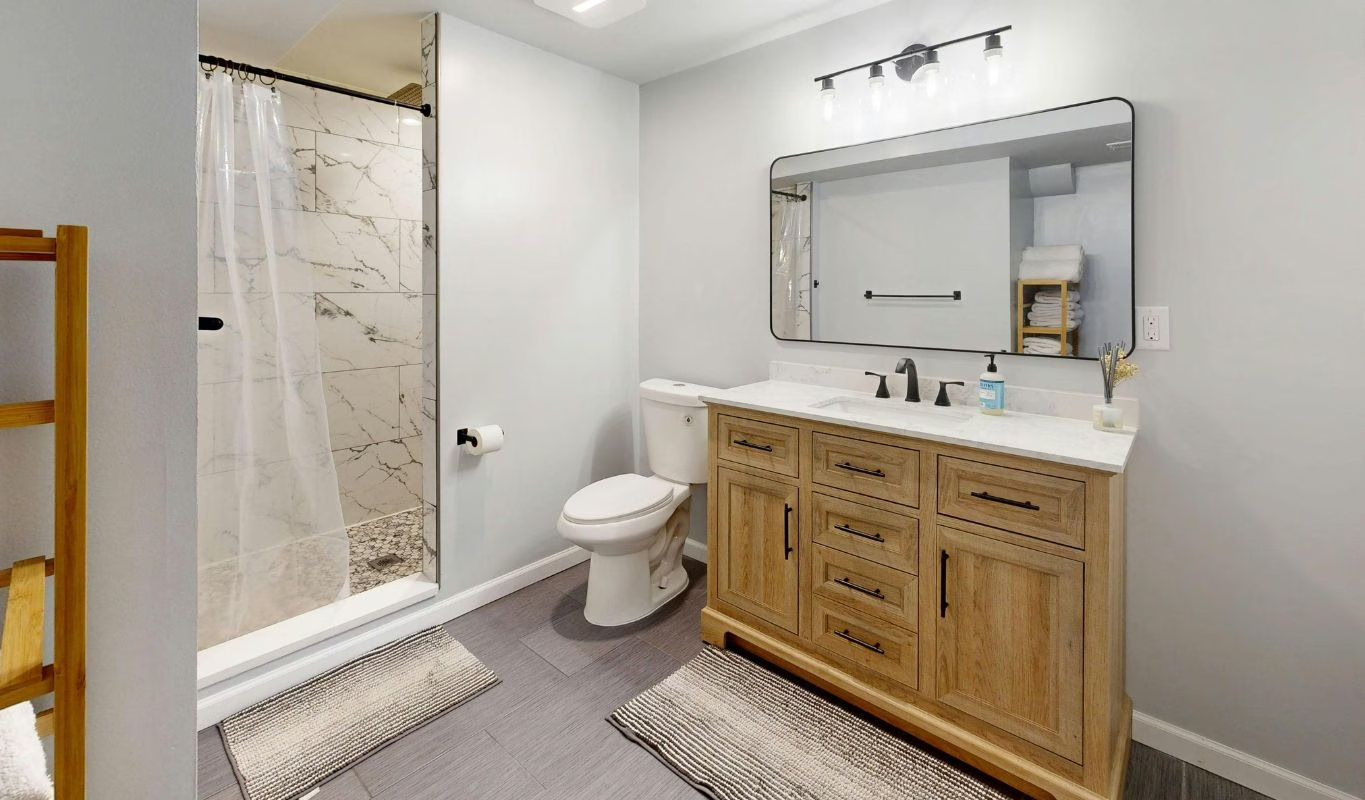
The “Wet” Addition (Bathrooms and Kitchens): Water is expensive. Adding a bathroom requires trenching for drains, running new supply lines, and expensive finishes like tile, vanities, and fixtures. A kitchen addition is even more complex due to gas lines, heavy electrical loads for appliances, and high-end cabinetry. If you are adding a kitchen, expect the “per square foot” cost to double compared to a standard bedroom.
The Bump-Out: A bump-out is a “micro-addition.” It might only add 2 to 5 feet to an existing room—just enough for a breakfast nook or a walk-in closet. Because these often don’t require a full foundation (sometimes using “cantilevered” joists), they are a budget-friendly way to transform a room’s feel without the six-figure price tag.
The Factors That Inflate Your Quote
If you haven’t looked at construction prices recently, you might be in for sticker shock. Several factors drive the modern building climate:
The Skilled Labor Shortage: The cost of human expertise has risen steadily over the last decade. There is a significant shortage of licensed electricians, plumbers, and HVAC technicians. Contractors are paying higher wages to retain talent, and those costs are reflected in the final bid.
High-Efficiency Requirements: Modern building codes are stricter regarding energy efficiency than they were even five years ago. New additions often require high-performance insulation, triple-pane windows, or smart-home integration to meet local green-building standards. While this adds to the upfront cost, it significantly lowers your long-term utility bills.
Site Complexity: Is your yard sloped? Is there a massive oak tree where the new room should be? Do you have a septic tank that needs to be moved? Excavation and foundation work can vary by tens of thousands of dollars based purely on what is happening underground.
The “Invisible” Costs: Beyond the Contractor’s Quote
When homeowners budget, they often only think about the “hard costs” (lumber and labor). However, the “soft costs” can easily account for 20% to 30% of your total investment.
Architectural and Design Fees: Unless you are using a “design-build” firm, you will need to hire an architect. Professional plans are required for permits and ensure the addition doesn’t look like a “wart” on the side of your house. It ensures the rooflines match and the aesthetic flows seamlessly from old to new.
Utility Upgrades: Your current electrical panel might be 100-amp service, which was fine for the original house. But once you add a new HVAC zone and modern appliances, you may need a 200-amp upgrade. Similarly, your water heater may not be able to handle an extra shower, leading to the unexpected purchase of a tankless system or a larger secondary tank.
Landscaping and “Make-Good” Costs: Heavy machinery will destroy your lawn. It is almost a guarantee. When budgeting, many people forget that they will need several thousand dollars at the end of the project for sod, bushes, and repairing the driveway that was cracked by heavy delivery trucks.
The 20% Contingency: In renovation, the only certainty is the uncertain. Once walls are opened, you may find outdated wiring, mold, or structural “hacks” from previous owners. Never start a project without a 20% cash cushion above your contractor’s bid.
Planning for ROI: Is It Worth It?
A home addition isn’t just about comfort; it’s a financial move. The Return on Investment (ROI) varies significantly by project type:
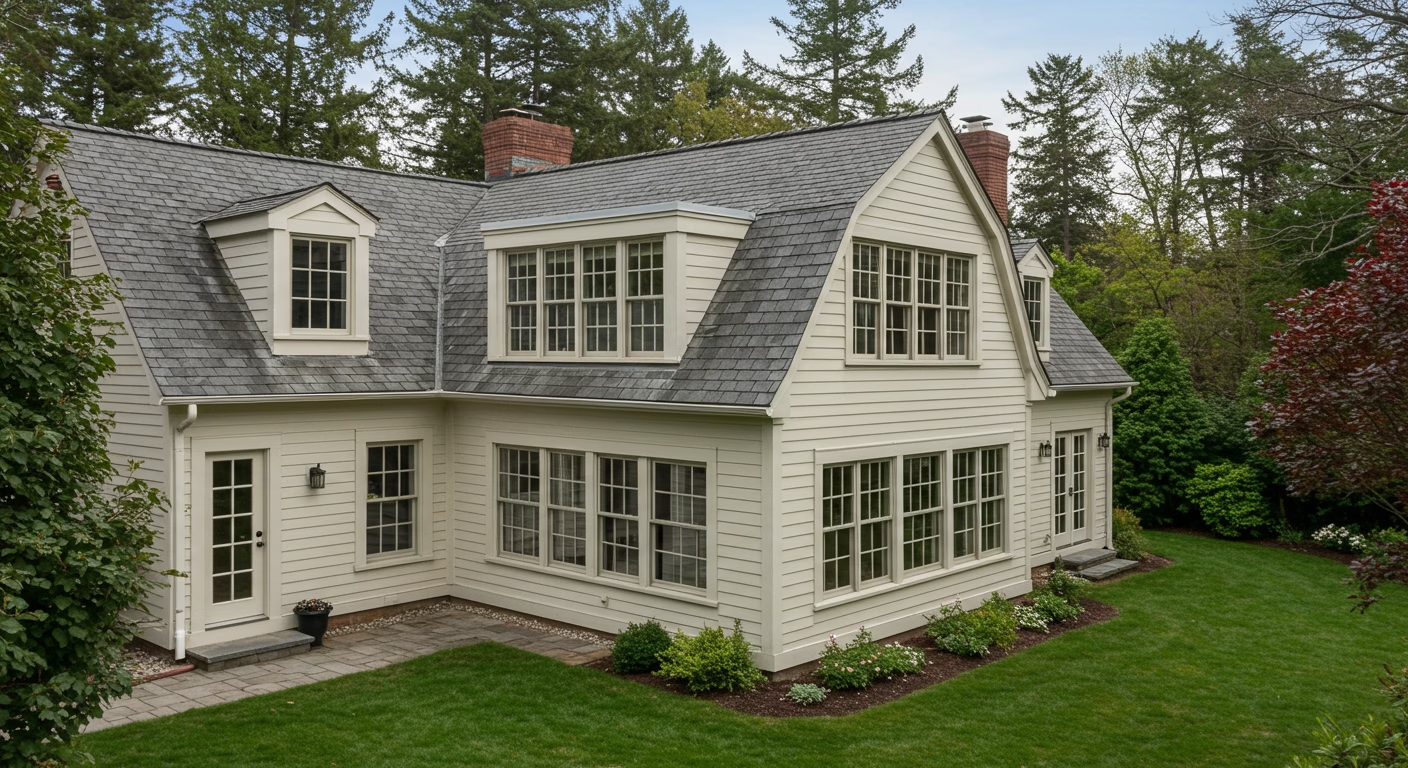
Two-Story Addition: Often sees a 65–75% ROI, especially if it adds a bedroom and a bathroom.
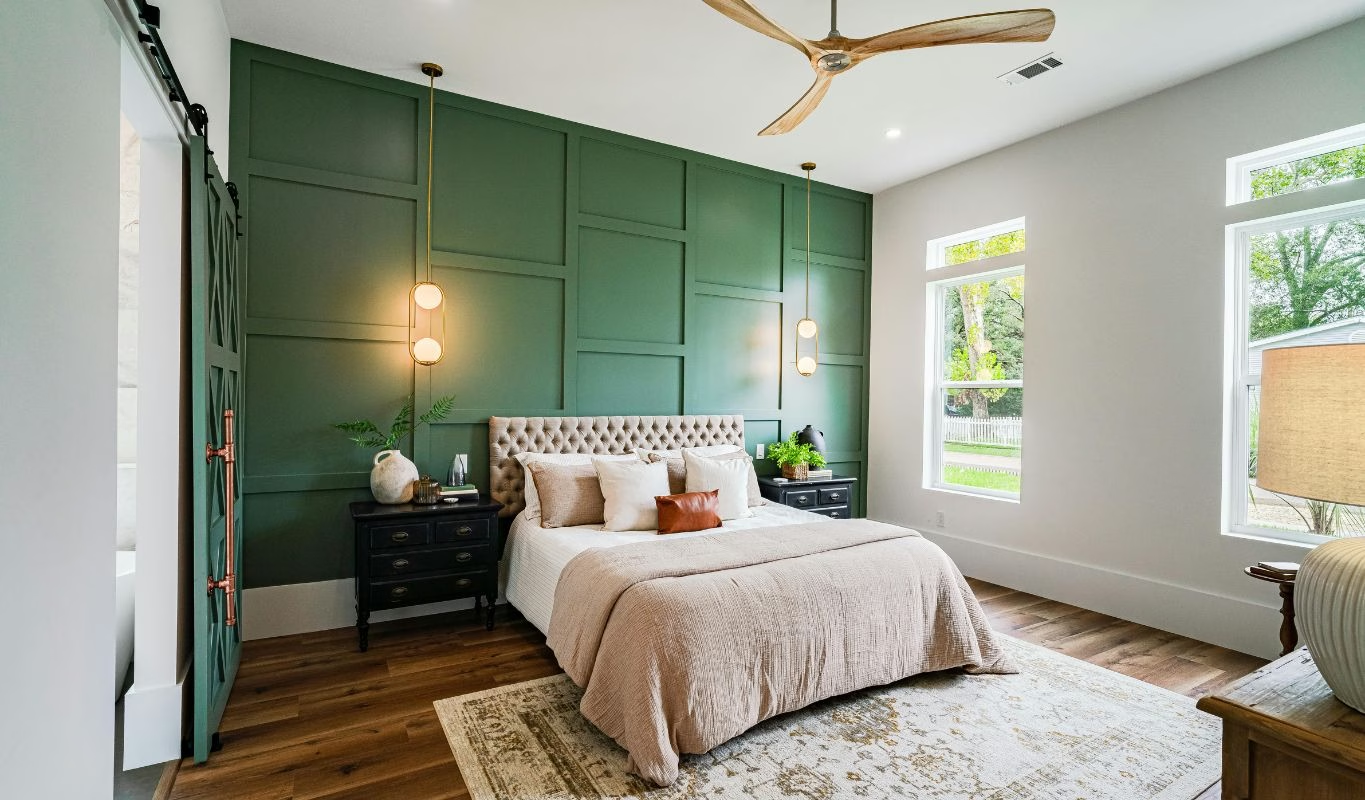
Primary Suite: High lifestyle value, usually yields a 60% ROI.
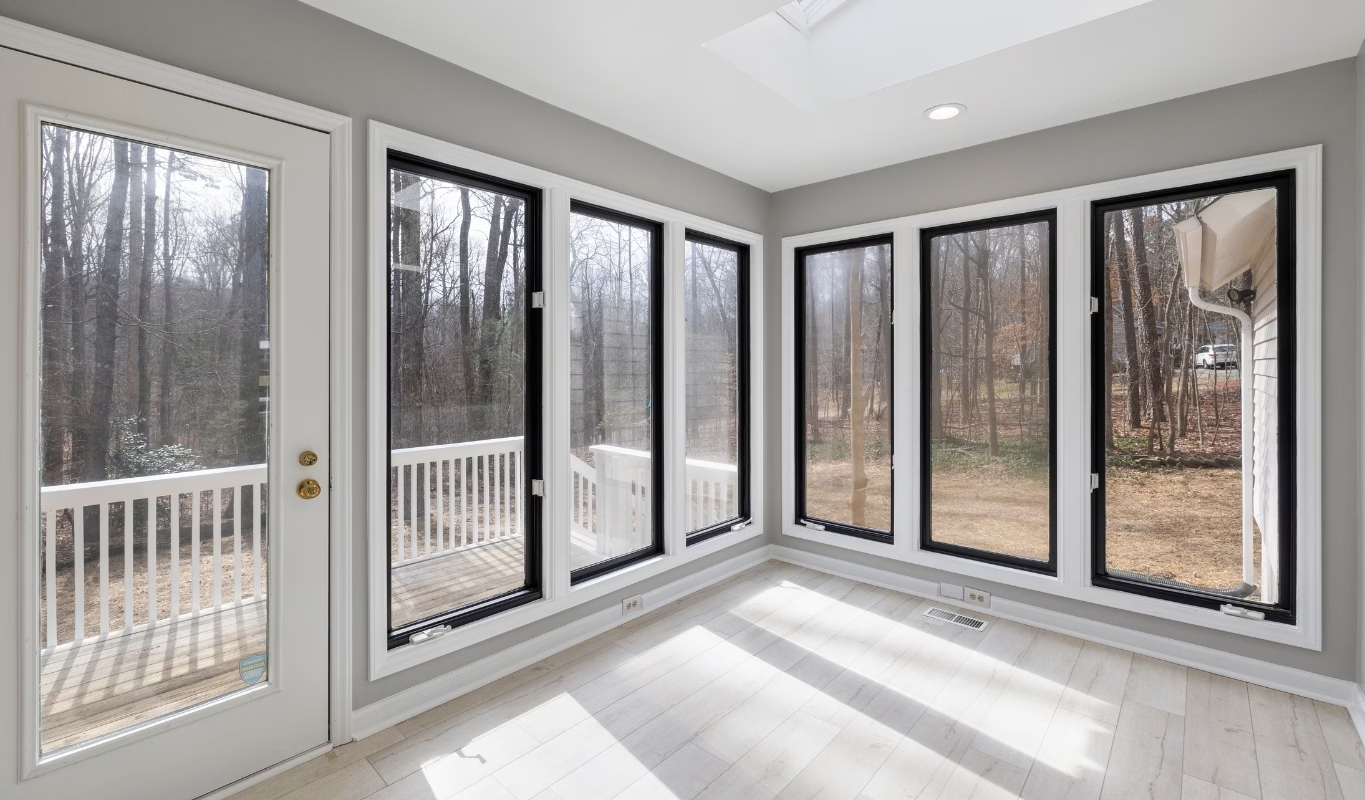
Sunrooms: Historically lower ROI (around 45–50%), as they aren’t always considered “living space” in appraisals.
Pro Tip: Look at the “ceiling” of your neighborhood. If most houses in your area are worth $500k, and you spend $200k on an addition that brings your total investment to $700k, you may struggle to recoup that money during a sale unless the entire neighborhood is appreciating rapidly.
Detailed Cost Breakdown Table
To give you a clearer picture, here is how a typical mid-range 400 sq. ft. addition budget is usually distributed:
| Category | Estimated Cost Percentage | Why? |
| Foundation & Masonry | 12% | Excavation, concrete, and footings. |
| Framing & Roofing | 20% | The “bones” and weatherproofing. |
| Exterior Siding/Windows | 15% | Matching the current home’s aesthetic. |
| HVAC, Plumbing, Electric | 18% | Rough-in and final fixtures. |
| Interior Finishes | 25% | Drywall, paint, flooring, and trim. |
| Permit & Design Fees | 10% | Legal compliance and blueprints. |
The Emotional Stages of a Home Addition
Building an addition is a marathon, not a sprint. Understanding the timeline helps manage the stress of living in a construction zone.
Phase 1: The Honeymoon (Design). You’re looking at Pinterest boards and picking out tile. Everything feels possible.
Phase 2: The Shock (Demolition). Your house is loud, dusty, and half-destroyed. This is usually when the “hidden” problems are found.
Phase 3: The Lull (Framing & Rough-ins). The structure goes up fast, but then it feels like nothing is happening for weeks while inspectors come and go.
Phase 4: The Fatigue (Finishes). You are tired of having workers in your house. You just want your kitchen back.
Phase 5: The Reward (Completion). The dust is gone, the furniture is in, and you finally have the space you dreamed of.
How to Vet a Contractor
With the market being so competitive, finding the right partner is crucial. Don’t just go with the lowest bid – in fact, the lowest bid is often a red flag for “change orders” later.
Check for Specialized Experience: Have they done this specific type of addition (e.g., a second story) before?
Verify Insurance and Licensing: Check that their policies are active and their trade licenses are in good standing with the state.
Ask for “Live” References: Ask to speak with someone whose project was completed in the last six months.
Start with a Realistic Budget
Adding onto your home is one of the most significant investments you will ever make. While the question “how much does a home addition cost” has a wide range of answers, the most successful projects share one thing in common: a detailed, transparent budget created before the first nail is driven.
By understanding the per-square-foot realities and accounting for the hidden soft costs, you can ensure that your new space brings more joy than financial stress.
Get Your New Home Addition in Pennsylvania
Are you ready to stop dreaming about more space and start building it? If you are looking for a home addition in Central PA, look no further.
Since the very beginning of our operations, our team has specialized almost exclusively in home additions. We don’t just “dabble” in extra space – it is the core of what we do. From the initial design and permitting to the final coat of paint, we are deeply experienced in the entire process and understand the unique structural and zoning requirements of the Pennsylvania landscape.
Don’t settle for a cramped home. Contact us today for a consultation and let’s build the space your family deserves!